
Rishikesh & Haridwar Travel Guide: The Complete Roadmap for Peace and Adventure
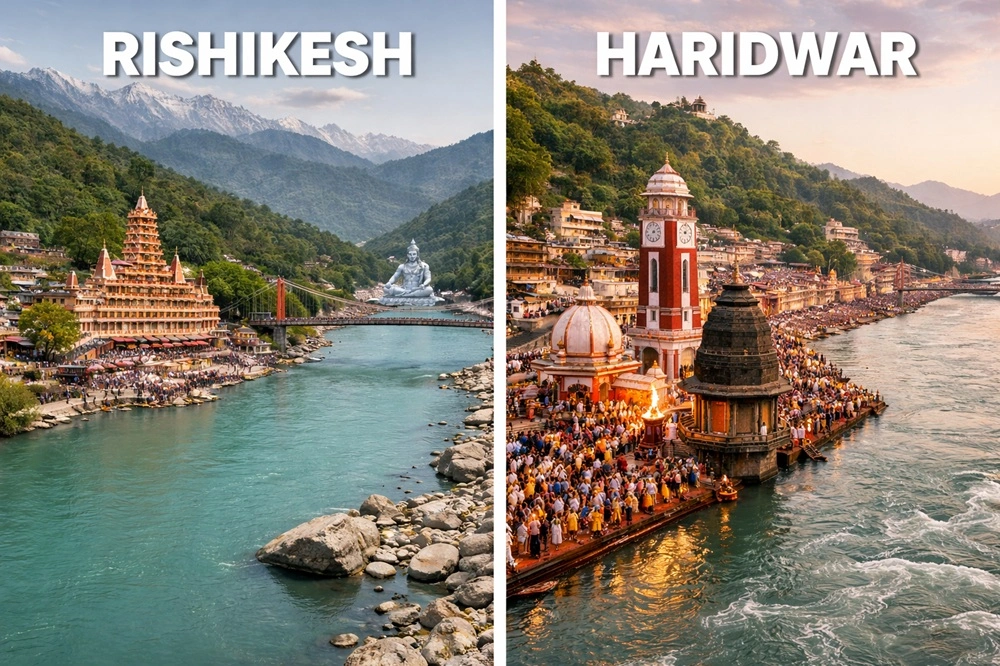
Two cities. One river. Completely different experiences — and most travellers mix them up until they arrive.
Haridwar is a city of ritual. Every evening at Har Ki Pauri, thousands of oil lamps float downstream while priests swing fire in synchronised arcs that have not changed in generations. The city moves at the pace of pilgrimage — deliberate, structured, and entirely centred on the Ganga.
Rishikesh, 25 km upstream, is something else. International yoga schools, Grade 3 white water rapids, riverside cafes, and the ruins of the ashram where The Beatles wrote some of their most significant work. It attracts serious practitioners and weekend thrill-seekers in roughly equal numbers.
Planning both cities well requires understanding that they serve different purposes — and that the logistics, accommodation, and timing strategies for each are distinct. This guide covers both with the ground-level detail that makes the difference between a trip that works and one that wastes a day recovering from a preventable mistake.
For international visitors beginning this journey, Reliable India Visa Documentation for Tourists through Suwish Global Travels covers the complete e-visa and consular application process — resolved before you land, not scrambled on arrival.
Haridwar vs. Rishikesh: The Honest Comparison
| Factor | Haridwar | Rishikesh |
|---|---|---|
| Distance from Delhi | 220 km (~4.5 hours) | 245 km (~5 hours) |
| Primary Experience | Devotional, ritualistic | International, active, wellness |
| River Use | Sacred bathing, aarti | Rafting, kayaking, riverside cafes |
| Alcohol Policy | Strictly prohibited | Strictly prohibited |
| Notable Landmark | Har Ki Pauri ghat | Bajrang Setu glass floor bridge |
| Best For | Pilgrimage, multi-generational families | Yoga retreats, adventure sports |
| Conference Facilities | Limited | Growing — dedicated retreat centres |
| Crowd Level | Very high on weekends and festivals | High in season, quieter in monsoon |
Recommended structure: Three to four days covering both cities. One night in Haridwar timed around the evening aarti. Two nights in Rishikesh — long enough for one full activity day and one retreat or sightseeing day. This avoids the rushed single-day visit that most travellers regret.
Haridwar Travel Guide
Har Ki Pauri: The Ganga Aarti
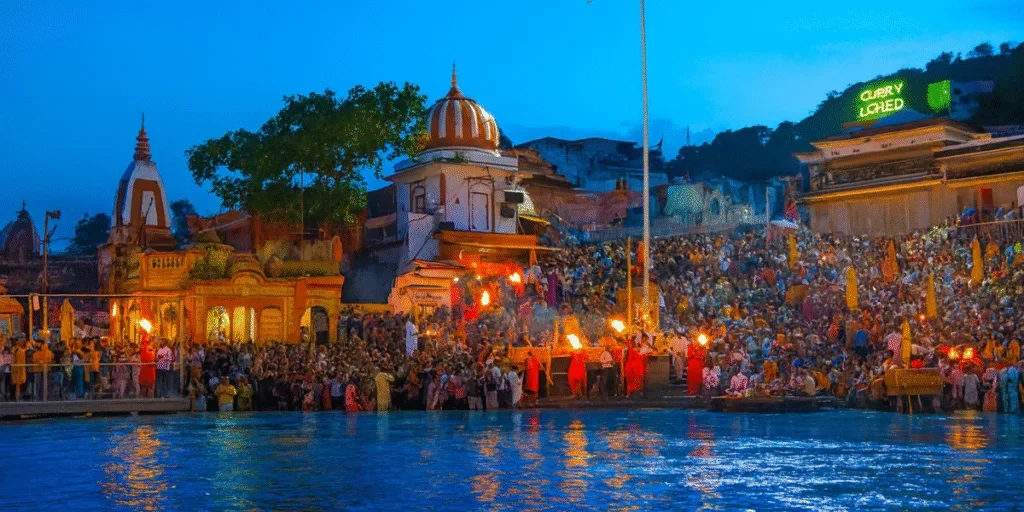
Har Ki Pauri is the central ghat and the experience that defines Haridwar for most visitors. The evening Ganga Aarti — priests swinging large fire lamps in synchronised rhythm while oil diyas float downstream — is one of the most affecting public rituals in North India.
Aarti timings shift with the season:
| Season | Approximate Aarti Time |
|---|---|
| Winter (Dec – Feb) | 5:45 PM – 6:00 PM |
| Spring (Mar – Apr) | 6:15 PM – 6:30 PM |
| Summer (May – Aug) | 7:00 PM – 7:30 PM |
| Autumn (Sep – Nov) | 6:00 PM – 6:30 PM |
Ghat conduct — Holy City regulations:
Haridwar enforces strict conduct rules at all ghats. These are legal requirements, not suggestions:
- Alcohol and non-vegetarian food are prohibited within city limits — possession and consumption both carry fines
- Plastic carry bags are banned — carry a cloth bag or purchase locally
- Leather items — bags, belts, shoes — must be deposited at designated storage before entering the main ghat area
- Loud music and disruptive behaviour near the ghats are subject to immediate police action
- Photography near the aarti sanctum requires discretion — follow instructions from on-duty priests
Pro-Tip: Arrive at Har Ki Pauri 45 minutes before the aarti begins — not 15. On weekends the ghat fills completely and latecomers watch from the bridge above, which is a different experience entirely. Midweek visits deliver the same aarti with roughly 40 percent of the weekend crowd.
Mansa Devi Temple: Cable Car vs. Trek
The Mansa Devi Temple sits atop Bilwa Parvat overlooking Haridwar. Two routes to the top:
Cable car (Udan Khatola):
- Operating hours: approximately 8 AM to 6 PM daily
- Weekend queue times: 45 to 90 minutes at base
- Best for elderly visitors, families with young children, or tight schedules
Trek route:
- 1.5 km from base on maintained stone steps
- 30 to 40 minutes at a comfortable pace — steep in sections
- The panoramic view of Haridwar and the Ganga from the top justifies the effort
Pro-Tip: The return cable car queue at the top frequently exceeds the ascent queue during peak hours. If you have a timed aarti commitment, build in an extra 30 minutes or trek down while the cable car queue builds.
Haridwar Parking: The Bhola Giri Ashram Tip
Haridwar’s lanes narrow significantly within half a kilometre of Har Ki Pauri. Parking near the ghat entrance is expensive and unreliable on weekends.
The verified solution: Bhola Giri Ashram. Located on the approach to Har Ki Pauri, this ashram provides organised parking within walking distance of the ghat at honest rates. Ask your driver specifically for Bhola Giri Ashram parking on arrival. From the parking point, the ghat is an eight to ten minute walk.
Delhi to Haridwar: Transport
By road: NH58 via Meerut — 220 km, four to four and a half hours under normal conditions. Best departure windows: before 5:30 AM or after 9 PM to avoid Ghaziabad–Meerut congestion.
By train: Haridwar Railway Station is well-connected from Delhi. The Jan Shatabdi Express and Shatabdi Express are the fastest options — approximately four hours. Book 30 to 45 days in advance for weekend travel.
For families, corporate groups, and international visitors requiring Delhi Airport Terminal 3 pickup with direct transfer to Haridwar, SUV and Car hire Delhi to Haridwar through Suwish Global Travels covers the full corridor — English-speaking drivers, GPS-tracked vehicles, and pre-planned rest stops on NH58 coordinated with your arrival time.
Rishikesh Travel Guide
Bridge Update: Laxman Jhula and the Current Alternatives
Laxman Jhula is closed. The iconic suspension bridge has been shut to pedestrians since 2019 due to structural concerns and has not reopened.
Current crossings:
| Bridge Name | Status | Notes |
|---|---|---|
| Ram Jhula | Open | Primary crossing — well-developed surroundings |
| Bajrang Setu | Open | Glass floor section — newest landmark crossing |
| Laxman Jhula | Closed | No pedestrian access — currently under safety review |
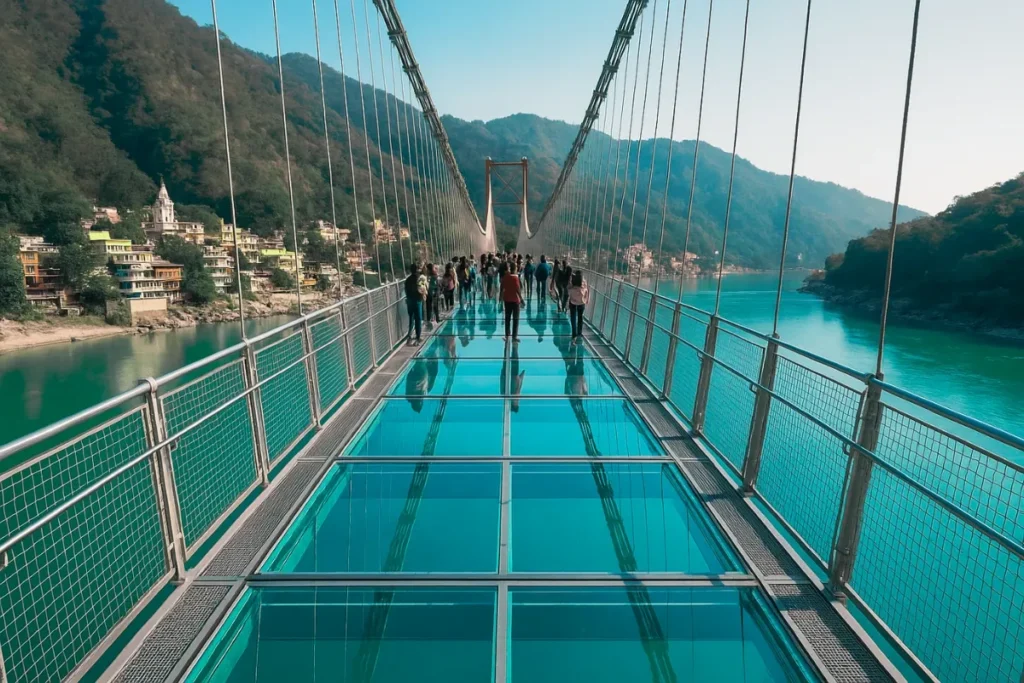
Bajrang Setu — the newest bridge in the corridor — features a glass floor section that gives visitors a direct view of the Ganga flowing beneath their feet. It sits near the original Laxman Jhula site and now serves as the primary east bank crossing for that area.
Pro-Tip: Bajrang Setu’s glass floor section is best visited in the morning before tourist volume builds. Late morning haze can reduce the clarity of the Ganga view below — arrive before 9 AM for the clearest experience.
Beatles Ashram: What to Know Before You Visit
Chaurasi Kutia — universally known as the Beatles Ashram — is where The Beatles spent several weeks in 1968 composing material that became the White Album. The ashram closed in the 1990s, transferred to the Forest Department, and reopened for visitors.
Practical details:
- Located on the east bank near Swarg Ashram — accessible via Ram Jhula or Bajrang Setu
- Entry fee: nominal Forest Department rate
- Time required: 45 to 60 minutes to cover the meditation domes, murals, and main structures
- Jungle has significantly reclaimed the structures — wear closed shoes
Yoga and Ayurvedic Retreats: Verified vs. Commercial
Rishikesh has hundreds of yoga schools ranging from internationally accredited institutions to short-term commercial operations that sell the aesthetic of wellness without the programme depth.
Verification checklist before booking:
- Yoga Alliance USA or India registration — visible on the facility’s official website
- Named senior teacher with documented lineage — not a rotating junior instructor roster
- Published daily schedule — practice, rest, and study periods clearly outlined
- Transparent pricing with a written cancellation and refund policy
- Residential programme with on-site accommodation
For Ayurvedic and Yoga Retreats booking in Rishikesh through Suwish Global Travels, every property in our network is verified for certification status, instructor credentials, and programme authenticity — not ranked by aggregator review volume alone.
The quiet zone: The corridor between Swarg Ashram and Kaudiyala on the east bank is significantly less commercial than the Ram Jhula tourist zone. For visitors investing in a genuine retreat, properties in this stretch deliver a meaningfully different environment from the high-street ashrams near the bridges.
White Water Rafting: Safety Grades Explained
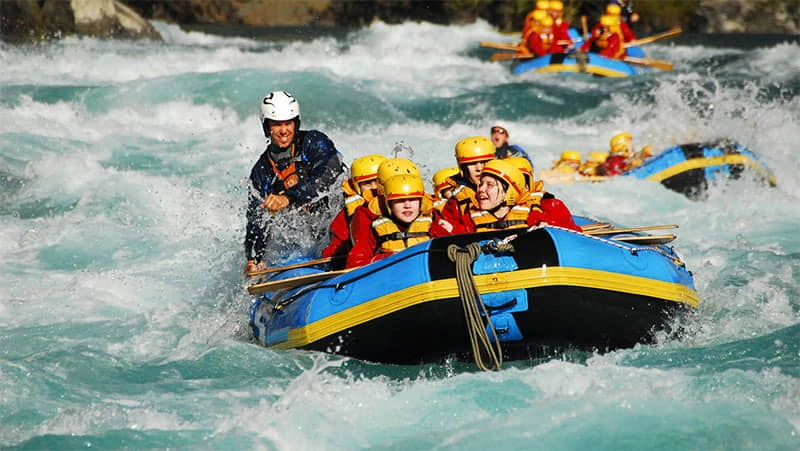
Rishikesh is India’s primary white water rafting destination. Choosing the wrong grade for your group’s experience level is a genuine safety risk — not a comfort issue.
Rafting Grade Reference:
| Grade | Stretch | Characteristics | Suitable For |
|---|---|---|---|
| ● Grade 1 | Short Rishikesh stretch | Calm, minimal rapids | First-timers, children, elderly |
| ● Grade 2 | Brahmpuri to Rishikesh | Moderate waves | Beginners with basic swimming ability |
| ● Grade 3 | Shivpuri to Rishikesh (16 km) | Strong rapids, paddling required | Most adult recreational rafters |
| ● Grade 4 | Kaudiyala to Shivpuri (36 km) | Powerful, complex manoeuvres | Experienced rafters only |
Before booking any operator independently, verify:
- Current season safety clearance from Uttarakhand District Administration
- Rescue kayak present on the water during the run
- Mandatory life jackets and helmets for all participants
- Instructor certification from the Indian Rafting Federation or equivalent body
Suwish Global Travels works exclusively with Grade-certified operators on this corridor.
Pro-Tip: The Grade 3 Shivpuri to Rishikesh run is the best value for most adult groups — 16 km, genuinely challenging, and well within reach of first-time rafters in reasonable physical condition. Grade 4 is for people who have rafted before and know exactly what they are committing to.
Bungee Jumping: Mohan Chatti
The primary bungee jumping facility operates at Mohan Chatti, 15 km from Rishikesh. Platform height: 83 metres — one of the highest fixed platforms in India. Weight limits (45 kg to 110 kg) and health restrictions are strictly enforced. Book in advance during peak season (October to June) — weekend slots fill by midday.
Common Mistakes Travellers Make — And How to Avoid Them
- Arriving late for the Ganga Aarti Arriving 15 minutes before means watching from the back of a crowd or from the bridge above. Arrive 45 minutes early — midweek if your schedule is flexible.
- Ignoring Rafting Safety Grades Booking Grade 4 because it sounds more exciting than Grade 3 without relevant experience is how people get hurt. Choose based on actual ability, not ambition.
- Expecting Laxman Jhula to be open It has been closed since 2019. Plan for Ram Jhula and Bajrang Setu from the start — not as a backup after arriving.
- Packing alcohol for the trip Both cities are strictly dry. The prohibition applies from the city boundary — not just in restaurants. Possession carries fines.
- Booking yoga retreats by review count alone High review volume on an aggregator does not indicate programme quality for a serious wellness stay. Use the verification checklist above before committing.
- Underestimating Delhi to Haridwar travel time 220 km sounds like three hours. With Ghaziabad–Meerut traffic on a Friday evening, it runs closer to six. Depart before 5:30 AM or after 9 PM — not as a cautious option but as a practical necessity.
- Not checking SIM card compatibility Only postpaid SIM cards work reliably in Uttarakhand’s mountain zones. Prepaid connections can be unreliable on the Rishikesh–Badrinath corridor. Convert to postpaid before departing Delhi or carry a backup postpaid number.
Corporate and Group Bookings: The GSTR-2B Advantage
For finance managers and HR teams managing corporate retreat expenditure on this corridor, the invoicing structure of your travel partner directly affects your Input Tax Credit recovery.
How GST recovery works:
Travel arrangement services fall under SAC Code 998551. The 18% GST on the service fee component is fully ITC-eligible — recoverable against your company’s output tax liability.
The GSTR-2B reconciliation requirement: Your ITC claim is only verifiable if the vendor’s invoice appears in their GSTR-1 filing, which then populates your GSTR-2B. Unregistered operators leave your ITC claim unverifiable — turning the 18% GST into a sunk cost rather than a recoverable credit.
On a ₹3 lakh service fee, the recoverable ITC is ₹54,000. For companies running two corporate retreats annually, the annual ITC recovery from correctly structured invoices typically ranges from ₹75,000 to ₹2,50,000.
What Suwish Global delivers for corporate accounts:
- Every invoice with correct SAC Code 998551 classification and GSTIN tagging
- Monthly consolidated statements formatted for direct GSTR-2B reconciliation
- Separate line items for accommodation, transport, and service fee — enabling accurate cost centre reporting
- Dedicated account manager from initial brief through post-event invoicing
Plan Your Trip: Two Ways to Start
Option 1 — WhatsApp for a response within the hour:
Share your travel dates, group size, and whether you want the spiritual circuit, adventure focus, or combined itinerary. We will send a structured plan within 24 hours.
[WhatsApp “RISHIKESH TRIP” to Suwish Global Travels]
Option 2 — Submit an Enquiry:
For corporate groups, MICE bookings, or international visitors requiring visa coordination alongside travel planning.
Continue Your Spiritual Journey
Haridwar and Rishikesh are two points on a longer pilgrimage route running through North India. The Ganga’s significance does not end at the foothills — it reaches its fullest expression further east at the oldest continuously inhabited city in the world.
Explore our guide to the oldest living city — the Varanasi Travel Guide covers the ghats, Kashi Vishwanath temple logistics, the Sarnath day trip, and the practical details that make the difference between a managed visit and an overwhelming one.