
Jodhpur Travel Guide: Strategic Planning & Luxury Logistics
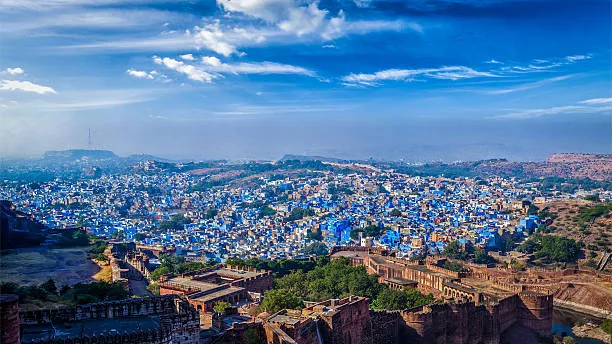
Most people arrive in Jodhpur expecting a desert city. What they find instead is something far more layered — a 15th-century fort that dominates the skyline like no other structure in Rajasthan, a labyrinth of indigo-washed lanes that have earned it the name “Blue City,” and a pace of life that has resisted modernisation in the best possible way.
But Jodhpur is also a city that punishes poor planning. Its narrow lanes are genuinely impassable for large vehicles. Its top heritage properties book out months in advance. Its best experiences — the hidden stepwells, the rooftop views, the pre-dawn fort visits — are invisible to travellers without local knowledge.
This guide is written for travellers who want more than a standard checklist. It covers the logistics that actually matter: how to move around the city, where to stay without overpaying, how to connect Jodhpur to the wider Rajasthan circuit, and why the difference between a good trip and an exceptional one often comes down to ground-level coordination.
Suwish Global Travels has been managing inbound travel across Rajasthan for years — navigating desert climate, narrow-lane logistics, and heritage property bookings as a single integrated service. This guide reflects that on-the-ground experience.
Arrival & Connectivity: The Gateway to Marwar
Jodhpur is well connected by both air and rail, and your arrival point shapes the first hour of your trip significantly.
Jodhpur Airport (Jodhpur Airport Code: JDH) is a small but functional airport approximately 5 kilometres from the city centre. It receives direct flights from Delhi, Mumbai, Jaipur, and Bengaluru. Despite its proximity to the city, the road to the old city and major heritage properties involves navigating increasingly narrow lanes — which matters when you are carrying luggage.
Jodhpur Railway Station sits closer to the old city and is the arrival point for most domestic travellers coming from Delhi (Mandore Express, Suryanagari Express) or Jaipur. It is well connected and generally reliable for overnight journeys.
Here is a practical distance and travel time reference from both arrival points:
| From | To | Distance | Travel Time |
|---|---|---|---|
| Jodhpur Airport | Mehrangarh Fort | 6 km | 20–30 min |
| Jodhpur Airport | Umaid Bhawan Palace | 4 km | 15 min |
| Jodhpur Airport | Old City / Clock Tower | 7 km | 25–35 min |
| Railway Station | Mehrangarh Fort | 2.5 km | 15–20 min |
| Railway Station | Umaid Bhawan Palace | 4 km | 20 min |
| Railway Station | Toorji Ka Jhalra | 1.8 km | 10–15 min |
The Transport Reality
This is the point most travel guides skip. Jodhpur’s old city — where most of the significant architecture, markets, and heritage stays are concentrated — is built around lanes that are physically too narrow for standard buses and many larger vehicles. Auto-rickshaws can access some areas; most cannot reach the lanes immediately surrounding the fort and the blue-washed neighbourhoods below it.
For international travellers arriving with luggage, moving between heritage properties, and covering the wider Jodhpur circuit in 2 to 3 days, a private car hire in Jodhpur with a knowledgeable driver is genuinely the most practical decision — not a luxury upgrade. The driver familiarity with parking spots near restricted lanes, timing around peak congestion near the Clock Tower area, and routes between outlying properties like Umaid Bhawan and the fort makes a material difference to your day.
Pro tip: If you are self-navigating within the old city on foot, the lanes between Mehrangarh’s base and the Clock Tower are best walked in the early morning — before 8 AM — when street vendors are setting up and the light on the blue walls is at its best.
Planning a trip to the Blue City? Avoid the struggle of navigating Jodhpur’s narrowest lanes and coordinate your journey with an expert Inbound Tour Operator in Delhi to ensure a seamless on-ground experience.
Architectural Icons: Navigating Jodhpur's Heritage
Jodhpur’s built heritage is extraordinary in scale and condition. These are not ruins — they are structures that have been continuously inhabited, maintained, and in several cases still actively used by the royal family and local communities. That living quality is exactly what makes them worth the visit.
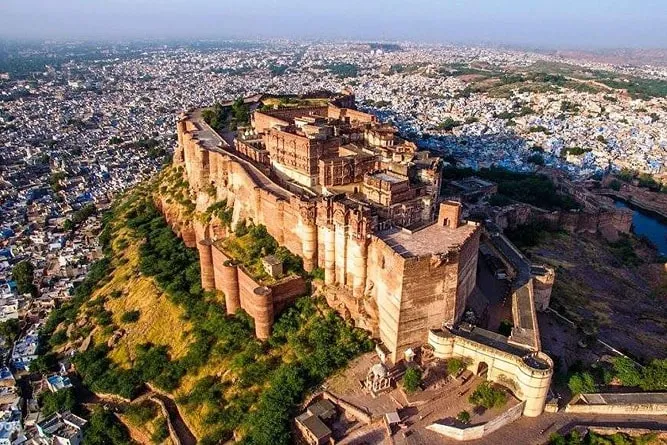
Mehrangarh Fort
Built in 1459 by Rao Jodha, Mehrangarh sits on a 125-metre rocky outcrop visible from across the city. Its museum holds one of Rajasthan’s finest collections — royal palanquins, miniature paintings, armour, and textiles. The fort’s seven gates each mark a military victory; Lohapool preserves the handprints of royal widows in the stone itself — history literally embedded in the walls.
Timings: 9:00 AM – 5:00 PM Entry: ₹100 (Indians), ₹600 (Foreigners) — includes audio guide Tip: Arrive by 8:30 AM to explore before the crowds build up after 10 AM.
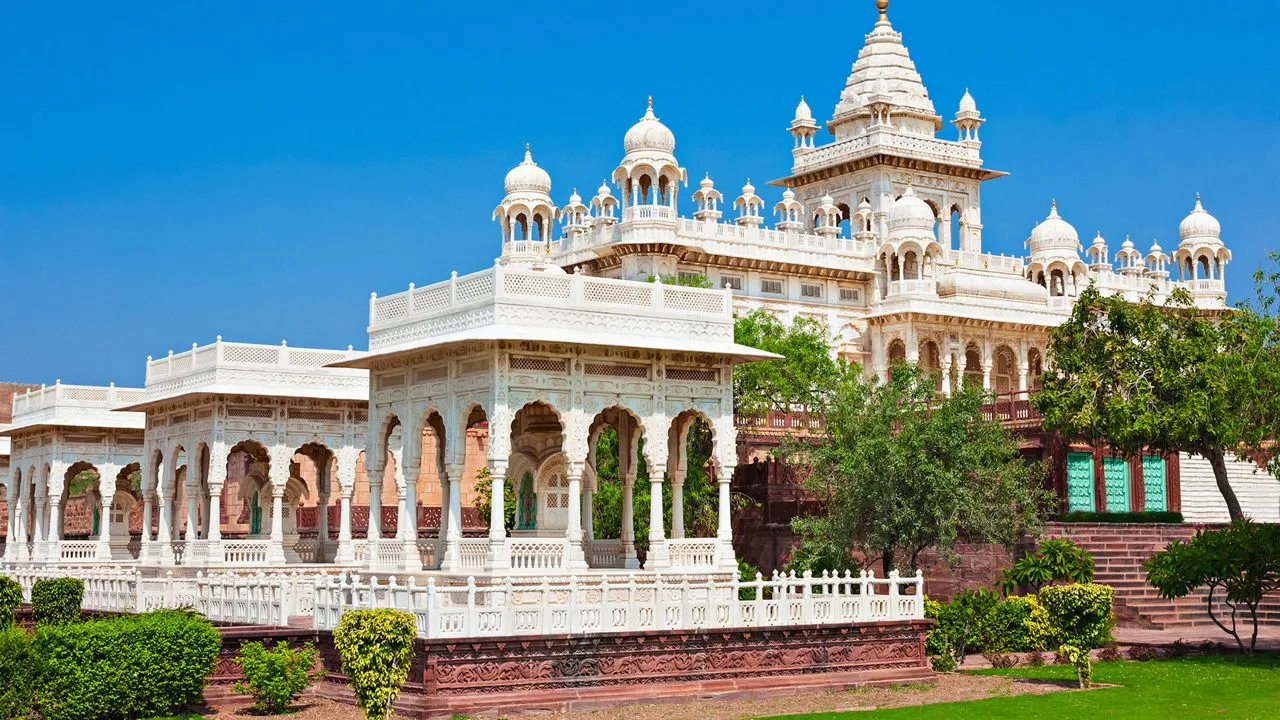
Jaswant Thada
A 10-minute walk from Mehrangarh’s base, Jaswant Thada is a white marble memorial cenotaph built in 1899 for Maharaja Jaswant Singh II. It is almost always visited as a footnote to the fort — which does it a disservice. The marble is so thinly cut that it glows translucent in direct sunlight, and the garden complex surrounding it offers one of the few unobstructed views of Mehrangarh from below.
Timings: 9:00 AM – 5:00 PM Entry: ₹30 (Indians), ₹50 (Foreigners)
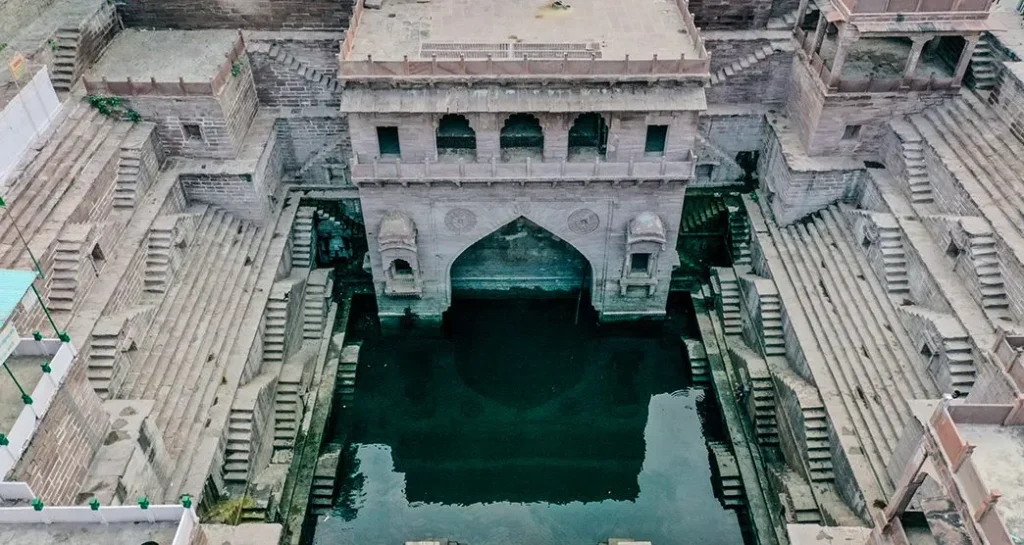
Toorji Ka Jhalra — The Stepwell Most Visitors Miss
If Mehrangarh is Jodhpur’s most visited landmark, Toorji Ka Jhalra is its most underrated. Built in the 18th century and restored in 2012, this stepwell sits in the heart of the old city and descends in perfectly symmetrical tiers to the water below. Unlike royal monuments built in isolation, this was a community water structure — and the surrounding neighbourhood still feels like one. At golden hour, the warm light across the sandstone tiers makes it one of the best photography spots in the city.
Entry: Free Best time: Late afternoon, 4:00–6:00 PM
Luxury Heritage Stays: Selecting Your Base
Jodhpur has three tiers of heritage accommodation, and choosing correctly depends entirely on what kind of experience you are after.
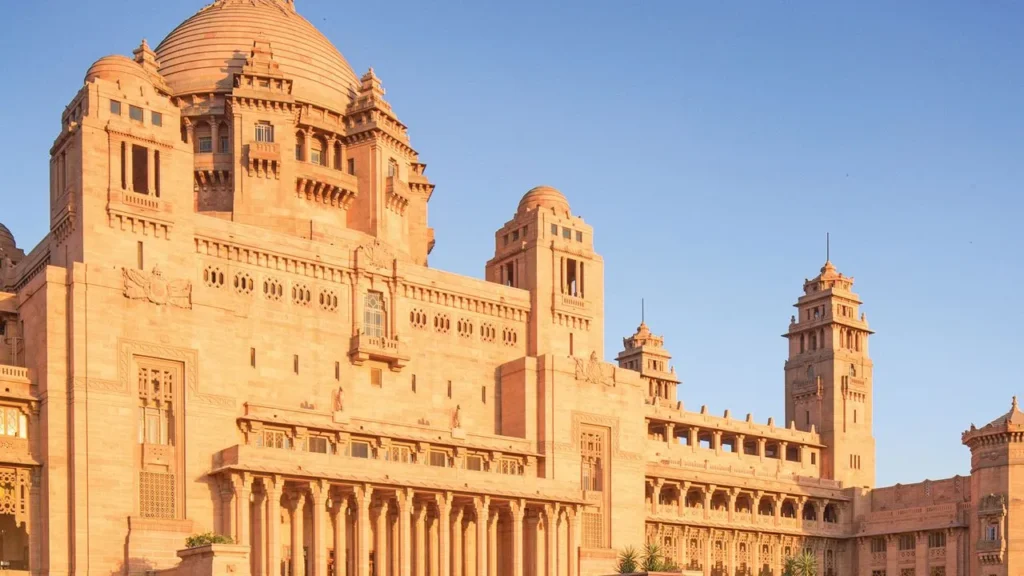
Umaid Bhawan Palace (Taj Hotels)
The largest private residence in the world still inhabited by a royal family. The Umaid Bhawan was built between 1928 and 1943 and covers 26 acres. The Taj-managed hotel wing offers 64 rooms and suites, a museum wing open to non-guests, and a level of grandeur that is genuinely unmatched in Jodhpur.
It is the right choice for travellers who want the full royal experience — formal dining, heritage suites, manicured grounds — and are comfortable with the price point that entails. It is located outside the old city, which means you will need transport to reach the fort and markets.
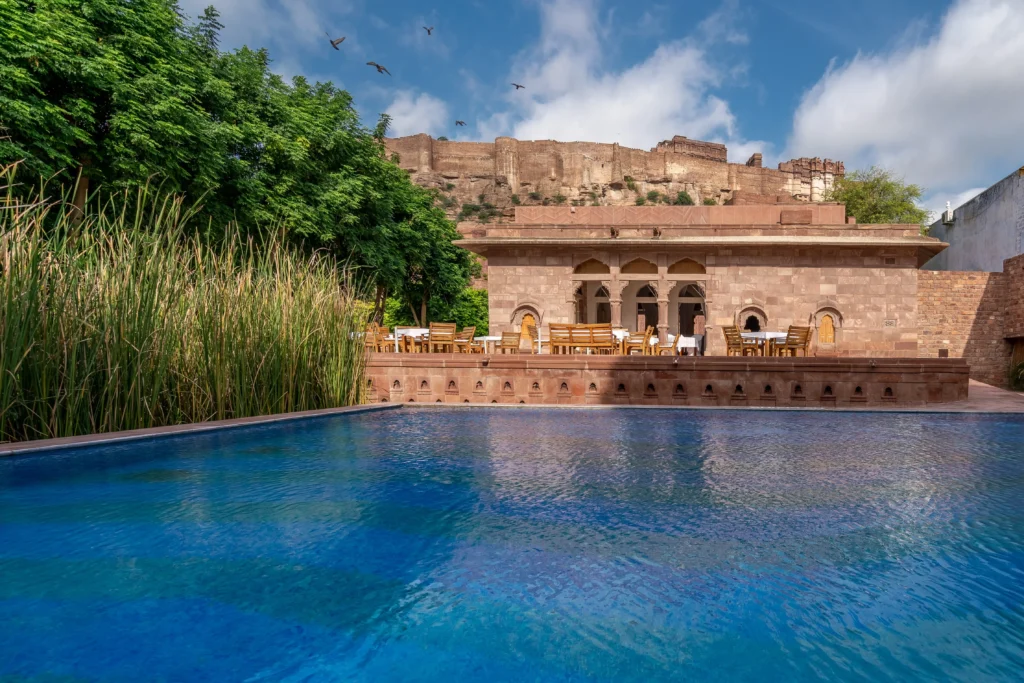
RAAS Jodhpur
A boutique property built into the base of Mehrangarh Fort — in a restored haveli complex with contemporary design layered onto 17th-century bones. RAAS offers something Umaid Bhawan cannot: you fall asleep with the fort lit up directly above you.
It is the better choice for travellers who want proximity to the old city, a smaller and more intimate property, and design-led hospitality over pure heritage grandeur. The rooftop restaurant is one of the best in the city.
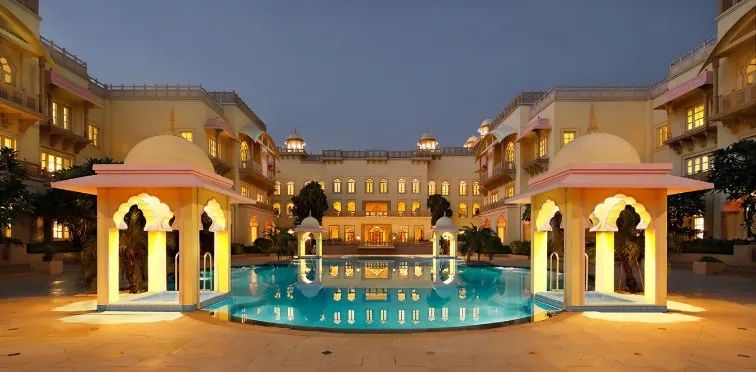
Taj Hari Mahal
Located in the new city area, Taj Hari Mahal is a conventional luxury option designed in traditional Rajasthani style. It suits business travellers or those who prefer a standard setup with easy access to Jodhpur’s commercial areas.
Practical note: RAAS and Umaid Bhawan book out well in advance during October to March. If your dates are fixed, plan 8 to 10 weeks ahead. Our Heritage Hotel Booking in Jodhpur from Delhi service covers all three properties with negotiated rates not always visible on standard platforms.
Need help securing the best heritage rates? Skip the booking uncertainty and Book Your Consultation with Travel Expert at Suwish Global Travels to find the perfect property for your Rajasthan circuit.
The Rajasthan Circuit: Beyond the Blue City
Jodhpur sits at the geographic heart of Rajasthan’s most travelled routes, which makes it an ideal base for extending your trip in multiple directions.
Jodhpur to Jaisalmer (270 km — approximately 4.5 hours) The desert drive west to Jaisalmer is one of the great road journeys in India — flat, open desert punctuated by villages, camels, and the occasional mirage. Jaisalmer’s golden sandstone fort, sam sand dunes, and haveli architecture are a natural extension of the Jodhpur experience.
Jodhpur to Udaipur (250 km — approximately 4 hours) Heading south takes you through the Aravalli hills toward Udaipur — a completely different landscape and a completely different city character. The drive itself passes through Ranakpur, home to one of the finest Jain temple complexes in the country, which makes a logical midway stop.
Jodhpur to Jaipur (340 km — approximately 5.5 hours) The road east connects Jodhpur to the Pink City, completing what is often called the Royal Rajasthan Circuit. If you are heading toward Jaipur next — or planning the Golden Triangle from there — our Jaipur Travel Guide covers the full itinerary, hotel recommendations, and logistics in the same level of detail as this guide.
Frequently Asked Questions
What is the best time to visit Jodhpur?
Ans October to March is ideal — temperatures are comfortable (15°C to 28°C), all monuments are fully operational, and the desert light is exceptional for photography. April and May are extremely hot (up to 42°C) and genuinely difficult for outdoor sightseeing. Monsoon (July to September) brings occasional rain but also a dramatic blue-grey sky over the fort that photographers specifically seek out.
How do I get around Jodhpur’s old city?
Ans The most practical combination is a private car with driver for inter-city movement and longer distances, combined with walking for the old city lanes. The area immediately surrounding the Clock Tower, Sardar Market, and Toorji Ka Jhalra is best explored on foot. Auto-rickshaws work for mid-distance travel within the city.
Is photography permitted inside Mehrangarh Fort?
Ans Personal photography is permitted throughout the fort and museum complex. Professional photography or video with equipment requires a separate permit, which must be arranged in advance through the fort administration.
How many days are enough for Jodhpur?
Ans Two full days covers Mehrangarh, Jaswant Thada, Toorji Ka Jhalra, the Clock Tower market area, and an evening in the old city comfortably. A third day allows for a day trip to Osian (65 km north) — an ancient temple complex in the desert — or a slower pace with more time in the markets and outlying neighbourhoods.
Is Jodhpur suitable for families with young children?
Ans Yes. The fort has wide pathways and is stroller-accessible in most areas. The old city walking routes are manageable for older children. The desert landscape and camel interactions available on the city outskirts are particularly engaging for families.
Expert Support for International & Domestic Travellers
Jodhpur is not a difficult city to visit independently — but it is a city where local knowledge consistently produces a better experience. The difference between knowing that Toorji Ka Jhalra exists and knowing to be there at 5 PM in October; between booking a heritage stay 10 weeks out versus finding everything full; between navigating the old city lanes with a driver who knows where to park and spending 40 minutes searching — these are the margins that separate a good trip from a genuinely memorable one.
As a leading Inbound Tour Operator in Delhi, Suwish Global Travels manages the full Rajasthan circuit — from airport arrival in Delhi to private transfers, heritage hotel bookings, guided fort visits, and onward connections to Jaipur, Jaisalmer, or Udaipur. Our team monitors your itinerary 24/7 throughout the trip, which matters most when things change — a delayed flight, a weather shift, a property issue — and you need someone on the ground who can respond immediately.
Get in touch with our team to discuss your Jodhpur dates, travel group, and the kind of experience you are looking for. We will put together a specific plan, not a template.