
Jaipur Travel Guide 2026: Plan Your Perfect Pink City Trip
Last Updated: March 2026 | Monument timings, night tourism schedules & Rajasthan travel advisory included.
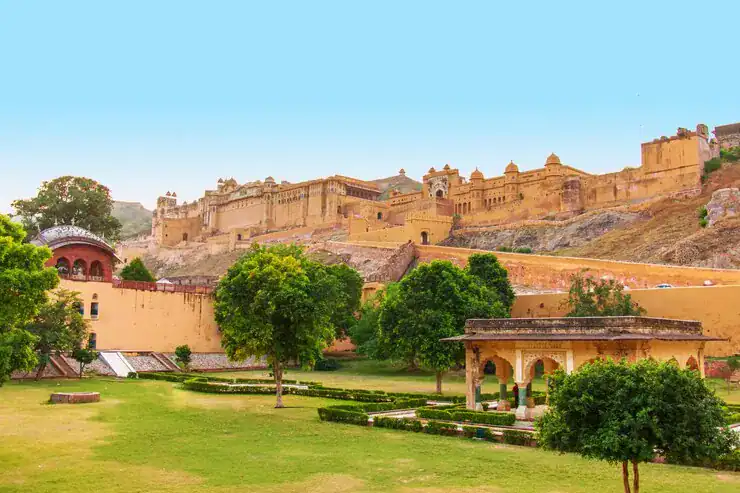
Jaipur — famously known as the Pink City — is unlike any other destination in India. It is where centuries-old forts cast long shadows over bazaars buzzing with colour, sound, and life. The capital of Rajasthan draws travellers from across the world, not just for its royal palaces, but for the feeling it leaves behind long after you have gone home.
Whether you are a solo backpacker on a tight budget, a couple looking for a heritage escape, or a family wanting to give children a real brush with history — Jaipur rewards every kind of traveller. But it does demand one thing: planning. From seasonal heat to peak-hour traffic near major monuments, getting it right makes all the difference.
This guide covers everything you need — how to reach Jaipur, what to see, what to eat, where to stay, and how to plan nearby day trips — so your time in the Pink City is genuinely memorable.
Reaching the Pink City: The Gateway from Delhi
For most international travellers, the journey into Rajasthan begins at Indira Gandhi International (IGI) Airport in Delhi. From there, Jaipur is approximately 280 kilometres away — roughly a 4.5 to 5-hour drive depending on traffic.
While flights exist, a Jaipur Car Rental with Driver remains the most practical and comfortable option for families and groups. It gives you door-to-door flexibility and lets you stop along the way at places like Neemrana Fort or roadside highway dhabas — experiences that no flight can offer. Booking a private vehicle also removes the stress of coordinating luggage across multiple transport modes.
Pro tip: If you are travelling during October–March, the NH48 drive is especially pleasant in the early morning hours. Plan to depart by 6–7 AM from Delhi to reach Jaipur before noon.
The Golden Triangle Circuit: Delhi – Agra – Jaipur
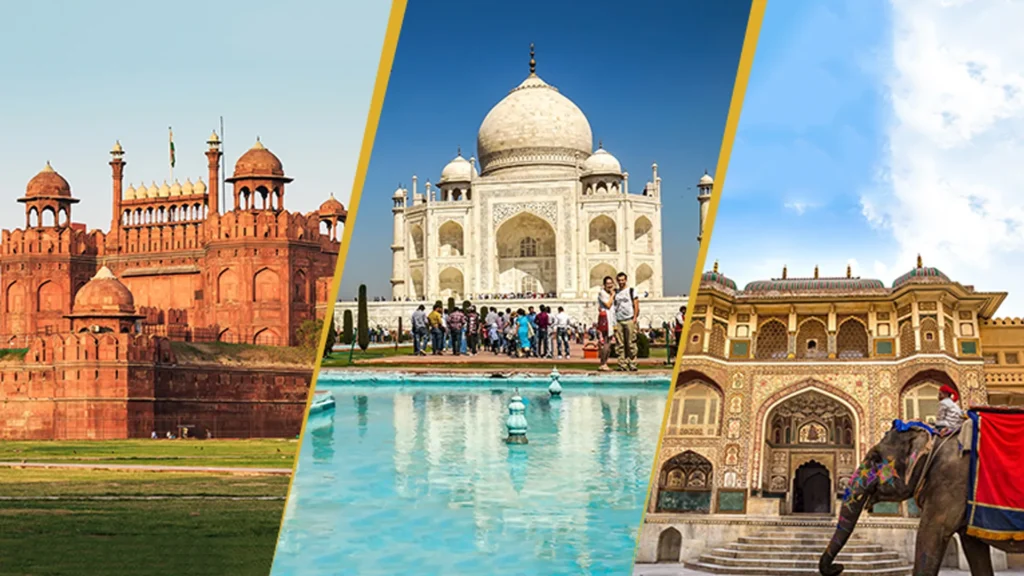
Jaipur is the third and final stop of India’s famous Golden Triangle Tour (Delhi–Agra–Jaipur) — arguably the most well-travelled cultural circuit in South Asia. Each city offers a completely different experience: Delhi’s layered history, Agra’s Mughal grandeur, and Jaipur’s royal Rajput legacy.
The circuit works best over 6 to 7 days, giving each city enough breathing room. For international visitors doing India for the first time, this route provides the most concentrated exposure to Indian heritage, architecture, cuisine, and culture in the shortest time.
At Suwish Global Travels, we specialise in making this circuit seamless — from airport coordination in Delhi to private guided tours across all three cities. Our Laxmi Nagar office serves as a ground-level hub for real-time support throughout your trip.
Iconic Sightseeing: Where History Breathes
Plan for a minimum of 2 to 3 full days in Jaipur if you want to experience the city without rushing. Here are the landmarks that deserve your time:
Amber Fort
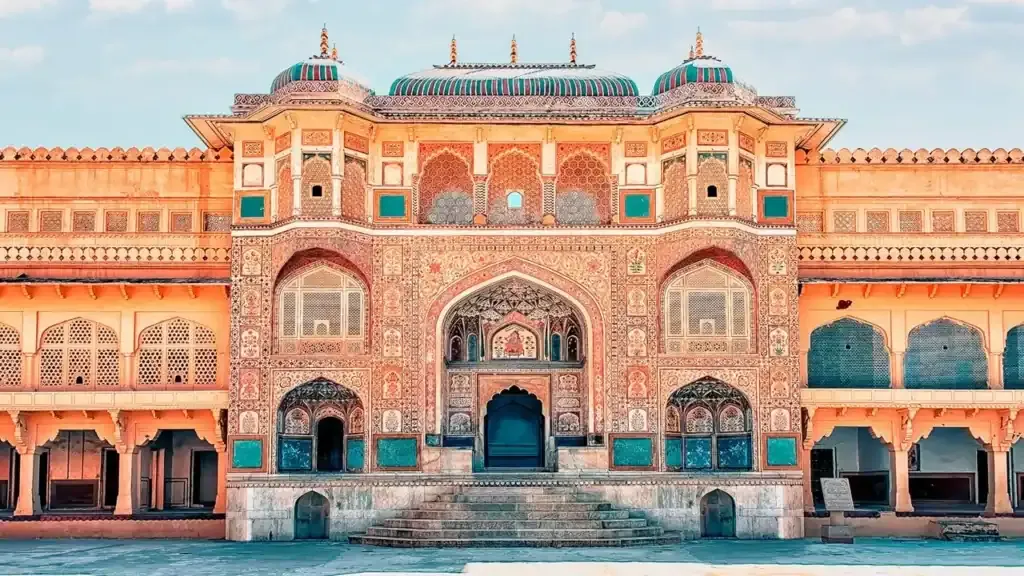
Perched dramatically on a hilltop in Amer, Amber Fort is a UNESCO World Heritage Site and one of the finest examples of Rajput military architecture in India. Built primarily from red sandstone and white marble, the fort blends Hindu and Mughal design in a way that still impresses historians and architects alike.
Inside, the Sheesh Mahal (Mirror Palace) is the showstopper — thousands of tiny mirrors embedded in the ceiling create a constellation effect when lit by a single candle. The grand Diwan-e-Aam, ancient temple, and sweeping views of Maota Lake below round out a visit that easily fills 2 to 3 hours.
Timings: 8:00 AM – 5:30 PM | Entry: ₹100 (Indians), ₹500 (Foreigners) Tip: Visit early morning to avoid crowds and harsh light for photography.
Hawa Mahal
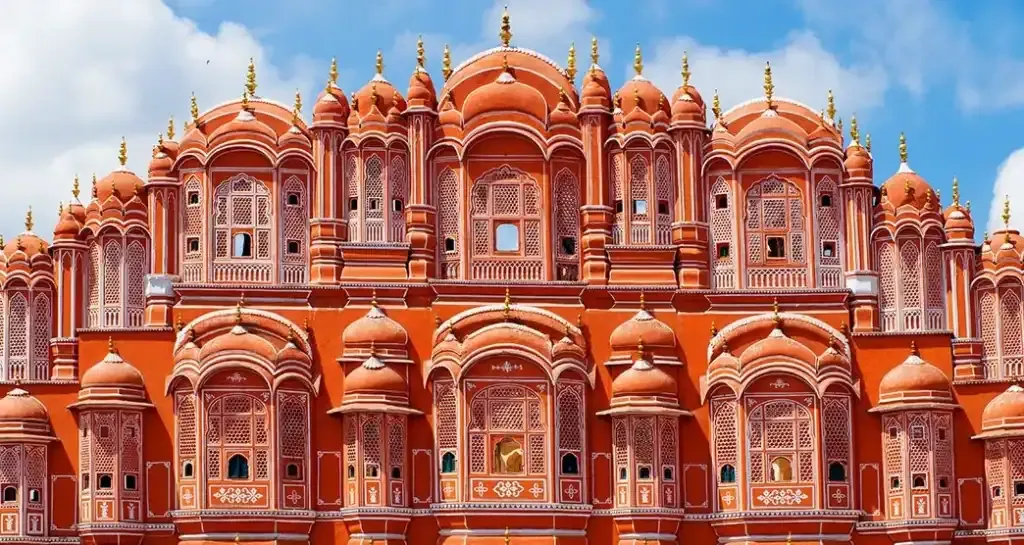
The Hawa Mahal, or “Palace of Winds,” is Jaipur’s most photographed structure — and for good reason. Built in 1799 by Maharaja Sawai Pratap Singh, this five-storey pink sandstone façade features 953 small latticed windows (jharokhas) that were designed to allow royal women to watch street processions while remaining unseen.
The structure’s clever design also creates a natural cross-breeze through its chambers, making it surprisingly cool even in summer. Most visitors photograph it from the street, but going inside offers a different perspective — narrow staircases, small rooms, and a rooftop view of the old city that is well worth the climb.
Timings: 9:00 AM – 5:00 PM | Entry: ₹50 (Indians), ₹200 (Foreigners)
City Palace & Jantar Mantar
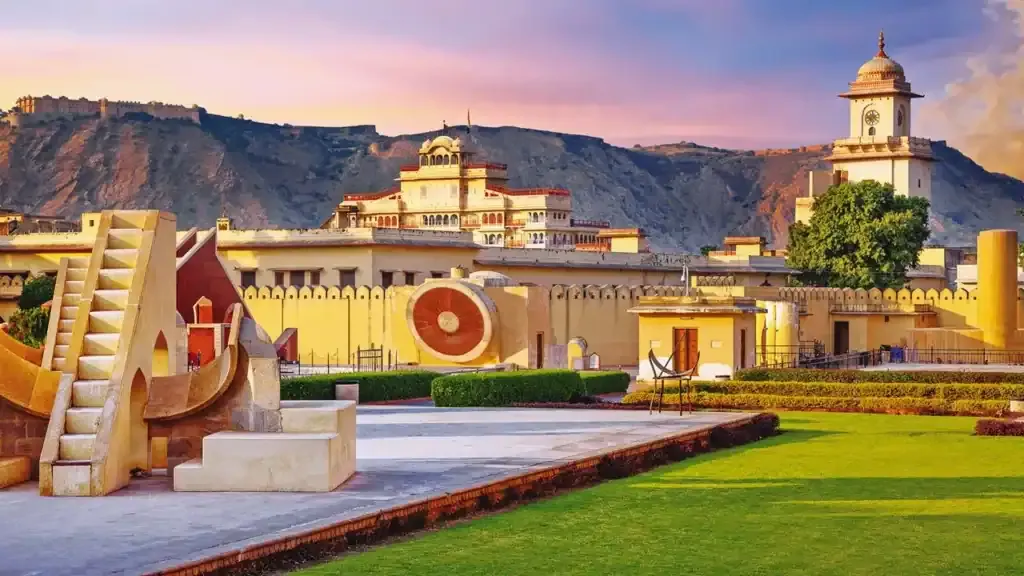
In the heart of the walled city sit two landmarks that together tell the story of Jaipur’s founding ruler, Maharaja Sawai Jai Singh II — a man who was as much a scientist as he was a king.
The City Palace is a working royal residence — parts of it are still occupied by the royal family — while its museums display royal costumes, weapons, and artefacts spanning centuries. Adjacent to it, Jantar Mantar is an 18th-century astronomical observatory recognised as a UNESCO World Heritage Site. Its centrepiece, the Samrat Yantra, is the world’s largest stone sundial and can measure time to an accuracy of two seconds.
Visiting both together takes around 3 hours and provides genuine insight into Jaipur’s intellectual and cultural history.
Timings: 9:30 AM – 5:00 PM (both sites)
Nahargarh Fort
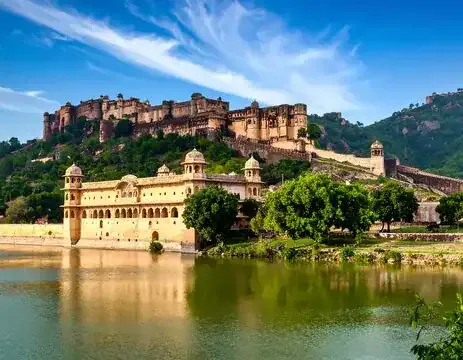
If Amber Fort is Jaipur’s grandest fort, Nahargarh is its most atmospheric. Built along the rugged Aravalli Hills overlooking the city, it was originally constructed as a defensive retreat for the royal family.
Today, it is best known for its panoramic sunset views — the entire Pink City spread below, turning golden as the sun dips behind the hills. The Madhavendra Bhawan inside features a series of interconnected royal suites decorated with frescoes and murals, many still in surprisingly good condition.
Pair a Nahargarh visit with an evening meal at one of the rooftop restaurants operating within the fort complex.
Timings: 10:00 AM – 5:30 PM | Entry: ₹50 (Indians), ₹200 (Foreigners)
Exploring Beyond Jaipur: Nearby Day Trips Worth Taking
If your schedule allows an extra day, these two destinations are absolutely worth the drive from Jaipur:
Abhaneri — Chand Baori Stepwell
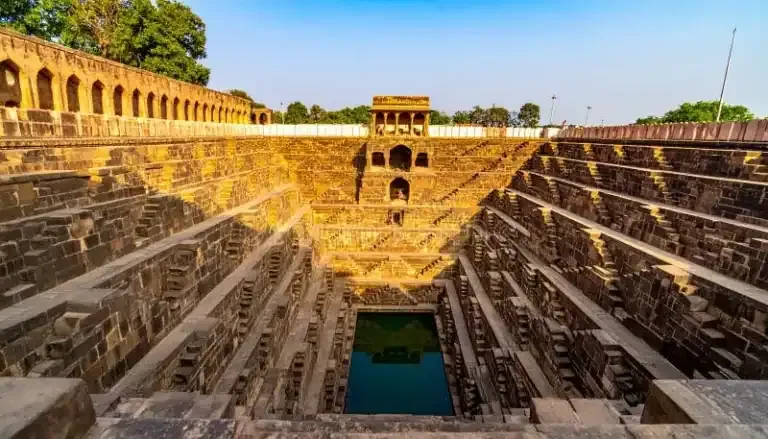
Located around 95 kilometres east of Jaipur, the village of Abhaneri is home to Chand Baori — one of the most visually striking structures in all of India. Built in the 8th–9th century, this stepwell descends 13 storeys and 30 metres into the earth through a perfectly symmetrical grid of over 3,500 narrow steps.
It was engineered to harvest monsoon rainwater and maintain cool temperatures underground during the blistering Rajasthani summers. Today it is both an archaeological site and a favourite spot for photographers. The geometric precision of the design — viewed from the top — is genuinely breathtaking.
Best time to visit: Early morning, when light falls evenly into the well. Nearby: The 10th-century Harshat Mata Temple is just steps away and worth a quick visit.
Pushkar & Ajmer
A comfortable 2.5-hour drive from Jaipur brings you to two towns that feel worlds apart from the city’s royal grandeur — and that is exactly the point.
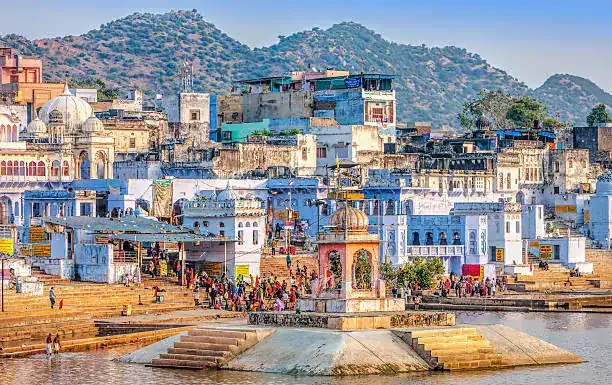
Pushkar is one of India’s most sacred towns, built around a holy lake and home to one of the world’s very few temples dedicated to Lord Brahma. The ghats surrounding Pushkar Lake have a quiet, meditative energy that is a genuine contrast to Jaipur’s bustle. The town is also famous for its annual camel fair (held in November) and its relaxed café culture.
Just 11 kilometres away, Ajmer carries a different kind of spiritual weight. The Ajmer Sharif Dargah — the shrine of Sufi saint Moinuddin Chishti — draws millions of devotees from across faiths every year. Visiting during the Urs festival is particularly powerful.
A Culinary Journey: Famous Foods of Jaipur
Jaipur’s food scene is as layered as its history — and skipping it would be a genuine mistake. Here are four dishes you should not leave without trying:

Pyaaz Kachori
The undisputed breakfast king of Jaipur. A Pyaaz Kachori is a deep-fried pastry with a spiced onion and potato filling that somehow manages to be crisp, flavourful, and completely addictive all at once. Rawat Mishtan Bhandar near Sindhi Camp is the most celebrated spot — expect a queue, but it moves fast.
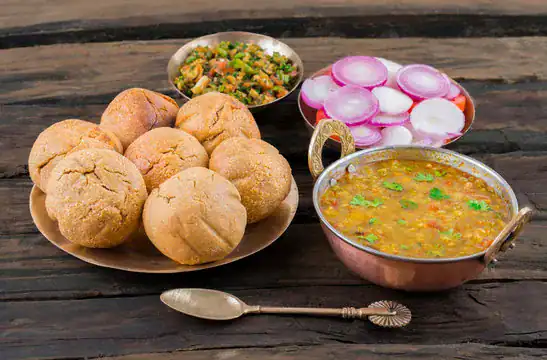
Dal Baati Churma
This is the dish that defines Rajasthani cuisine for most visitors. Baati are hard wheat rolls baked in a charcoal fire, served alongside thick dal (lentil curry) and churma — a crumbled, sweetened wheat preparation drenched in desi ghee. It is hearty, rustic, and surprisingly complex in flavour. Historically eaten by Rajput warriors on long campaigns, it remains a staple at traditional thalis across the city.

Ghevar
A Ghevar is a disc-shaped, latticed sweet made from flour, ghee, and milk — deep fried and soaked in sugar syrup, then topped with rabri (thickened cream) and crushed nuts. Particularly popular during Teej and Raksha Bandhan festivals but available year-round at most mithai shops. Light, crisp, and not overly sweet — the ideal end to a traditional Rajasthani meal.
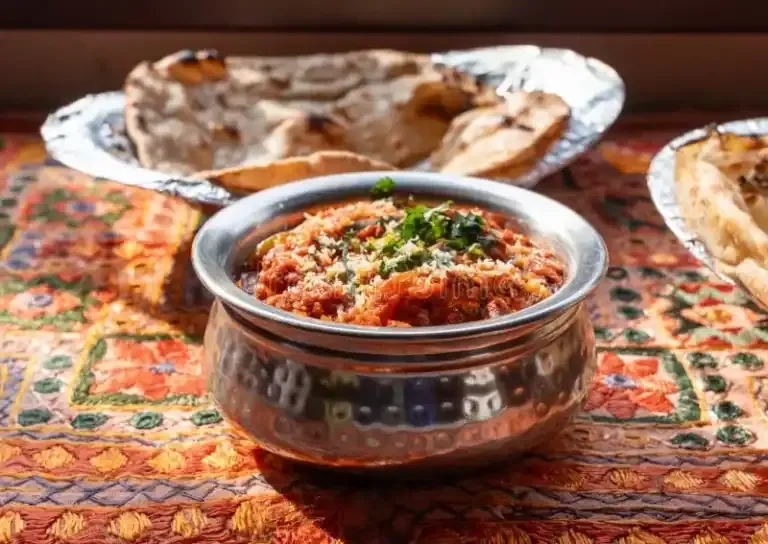
Laal Maas
For those who eat meat and enjoy bold, fiery flavours, Laal Maas is non-negotiable. This slow-cooked mutton curry gets its vivid red colour and intense heat from Mathania chillies — a variety grown specifically in Rajasthan. It originated in royal hunting camps and has lost none of its character since. Pair it with missi roti or bajra rotla for the full experience.
Staying in Style: Best Hotels in Jaipur
Jaipur offers a genuinely exceptional range of heritage properties — many of them former royal palaces converted into hotels. For the best rates and availability, explore our curated Jaipur Hotel Booking options across all budget ranges. Here are four properties that consistently deliver:
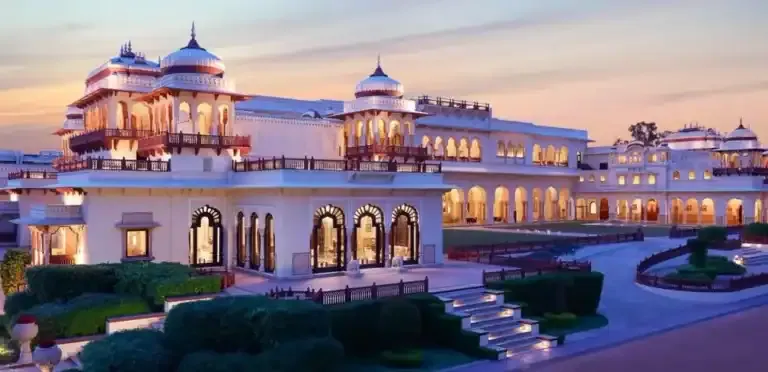
Rambagh Palace
Once the official residence of the Maharaja of Jaipur, Rambagh Palace is the most iconic luxury stay in the city. Spread across 47 acres of manicured lawns, it offers palatial suites, a world-class spa, and dining that lives up to the setting. The Polo Bar and Rajput Room restaurant are destinations in themselves.
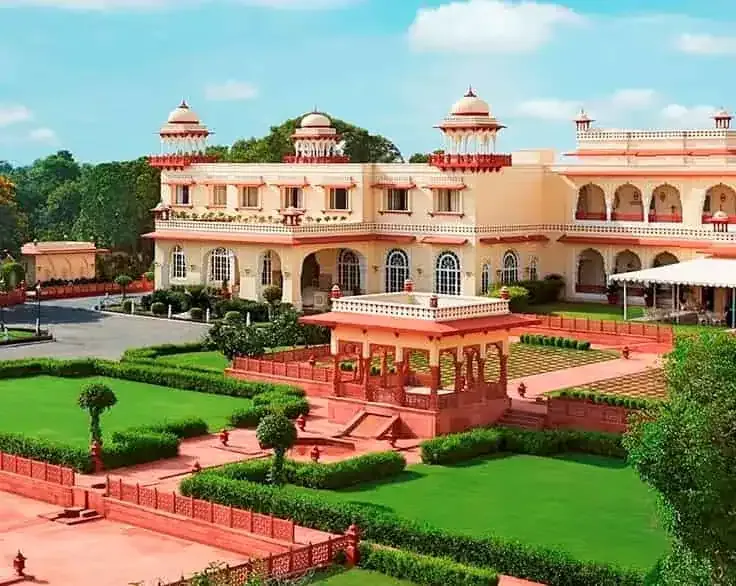
Jai Mahal Palace
Set within six acres of Mughal-inspired gardens near MI Road, Jai Mahal Palace balances heritage aesthetics with central city access. The property’s Indo-Saracenic architecture — complete with intricate stone carvings and miniature paintings — has been carefully preserved. Ideal for travellers who want a heritage stay without being too far from the action.
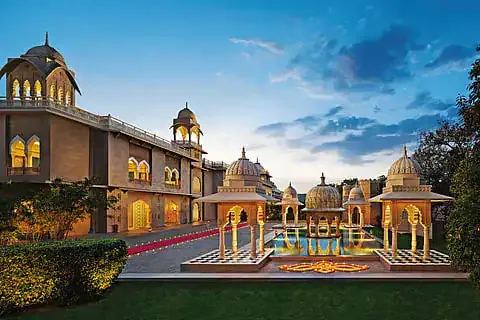
Fairmont Jaipur
Located closer to Amber Fort, Fairmont Jaipur suits travellers who prefer a quieter, resort-like environment. The property draws visual inspiration from Mughal and Rajput palaces — hand-painted murals, ornate archways, sky-high ceilings — while offering thoroughly modern amenities. Evening cultural performances and royal dining add genuine local flavour.
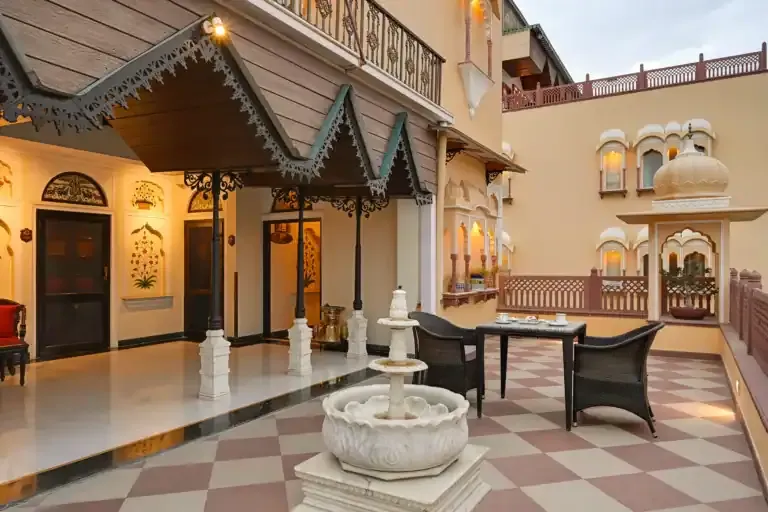
Shahpura House (Bani Park)
For travellers who find large luxury hotels impersonal, Shahpura House offers a boutique alternative that feels much more like staying in a private haveli. Family-run, with traditional frescoes, stone balconies, and a rooftop restaurant with city views — it delivers warmth and character that bigger properties rarely match.
Practical Information: Planning Your Jaipur Trip (2026)
| Detail | Info |
|---|---|
| Best time to visit | October to March (cool, dry, ideal for sightseeing) |
| Avoid | May–June (extreme heat, 40°C+) |
| Getting there | Delhi to Jaipur car rental (~5 hrs) or flight (~1 hr) |
| Getting around | Auto-rickshaw, Jaipur Metro, or car rental with driver |
| Currency | Indian Rupee (INR) — carry cash for smaller vendors |
| Language | Hindi, Rajasthani; English widely spoken at tourist spots |
| Dress code | Modest clothing recommended for temples and dargahs |
| Monument passes | Rajasthan Composite Ticket covers 5 major sites at a discount |
Frequently Asked Questions
How many days are enough for Jaipur? 2 to 3 days covers the major monuments comfortably. Add a day if you plan a trip to Abhaneri or Pushkar–Ajmer.
Is Jaipur safe for solo female travellers? Yes, Jaipur is generally considered safe. Stick to well-lit areas at night, use trusted transport, and dress modestly — the same precautions that apply across most Indian cities.
What is the best way to travel from Delhi to Jaipur? A private car rental with driver is the most flexible option, especially for families and groups. Trains (Shatabdi Express) are comfortable for solo travellers. Flights are fastest but eliminate the scenic journey and stopovers.
Can I visit Jaipur in 1 day from Delhi? Technically yes, but it is not recommended. You would rush through everything and miss the real experience. At least 2 nights is ideal.
What is the best time to visit Jaipur? October to March is ideal — cool weather, clear skies, and all monuments fully operational. Avoid peak summer months (May–June) when temperatures regularly cross 40°C.
📋 Traveller's Checklist for Jaipur (2026)
- Best Time: October to March
- Transport: Sorted via Jaipur Car Rental with Driver (booked above)
- Full Circuit: Plan your Delhi–Agra–Jaipur trip with our Golden Triangle Tour Guide
- Delhi Leg: Read our Delhi Travel Guide before starting your Rajasthan journey
- Hotels: Compare and book via our Jaipur Hotel Booking page (booked above)
Suwish Global Travels is based in Laxmi Nagar, Delhi and offers end-to-end travel coordination — from airport pickups to private city tours across the Golden Triangle. Get in touch for a customised itinerary tailored to your schedule and budget.