
The Complete Srinagar Travel Guide | Strategic Srinagar Tour Planner
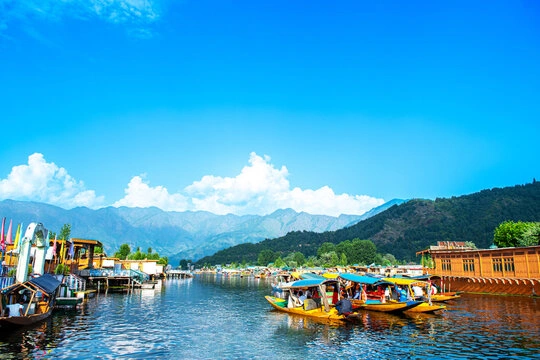
Planning a trip to Srinagar from Delhi sounds straightforward until you are three weeks out and still circling the same questions: Which month is actually worth the flight cost? Do houseboats on Dal Lake live up to the photographs or is that mostly marketing? What happens to your phone SIM the moment you land in Jammu & Kashmir? And how do you fit Gulmarg and Pahalgam into a trip without spending half of it in a car?
This Srinagar Travel Guide and Srinagar Tour Planner exists to answer those questions directly — not with generic seasonal advice lifted from a tourism brochure, but with the ground-level logistics that determine whether a Kashmir trip works or wastes four days of your annual leave.
Suwish Global Travels, based in Laxmi Nagar, Delhi, has managed Kashmir itineraries for families, solo travellers, and corporate groups across every season. For tailored Srinagar tour packages built around your specific travel dates and group size, speak to our travel team before you book anything independently.
Best Time to Visit Srinagar: A Seasonal Breakdown
There is no single best month for Srinagar — the correct answer depends entirely on what you want from the trip. Here is an honest breakdown by season.
Spring: March to May (The Tulip Window)
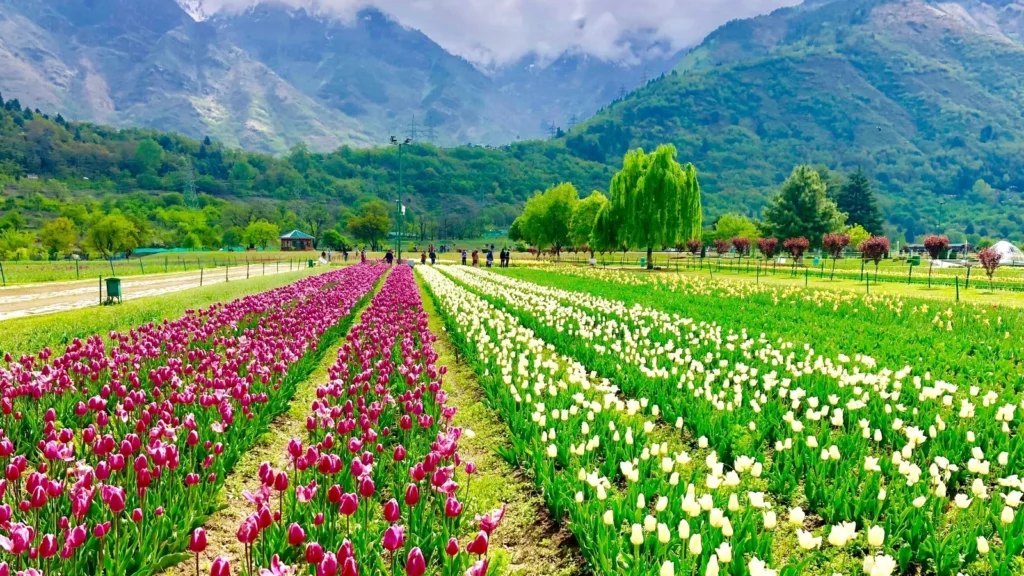
March and April are when Srinagar earns its reputation. The Indira Gandhi Memorial Tulip Garden — Asia’s largest tulip garden, on the slopes above Dal Lake — blooms from mid-March to mid-April depending on the year. In 2026, expect peak bloom around the last week of March.
This is also when the chinar trees begin to leaf, the Mughal Gardens recover their colour, and the temperature sits between 8°C and 20°C — comfortable for sightseeing and Shikara rides without the summer crowds. Accommodation books out 6 to 8 weeks in advance during tulip season. If this window is your target, plan early.
Summer: June to August (Houseboat Season)
June through August brings Delhi families escaping the plains heat. Srinagar temperatures stay between 15°C and 30°C, and this is the classic houseboat season — long evenings on Dal Lake, Shikara rides at dawn, and the full Kashmir Valley experience at its most accessible. July and August bring occasional rain, but rarely enough to disrupt plans significantly.
This is also the busiest period. Gulmarg (approximately 52 km from Srinagar) and Pahalgam (approximately 95 km) both see peak footfall in summer, and the Srinagar-Gulmarg-Pahalgam circuit requires advance booking for both accommodation and vehicles.
Autumn: September to November (Saffron and Colour)
September and October are the most underrated months in Kashmir. The summer crowds have thinned, the chinar trees turn from green to gold and red, and the Pampore saffron fields (15 km from Srinagar) begin their harvest in late October — a genuinely rare spectacle that most Kashmir itineraries miss entirely.
Temperatures drop noticeably by November — evenings require a jacket — but the light quality for photography and the relative quiet of the tourist sites make this the choice for travellers who want Kashmir without the queue.
Winter: December to February (Snow Kashmir)
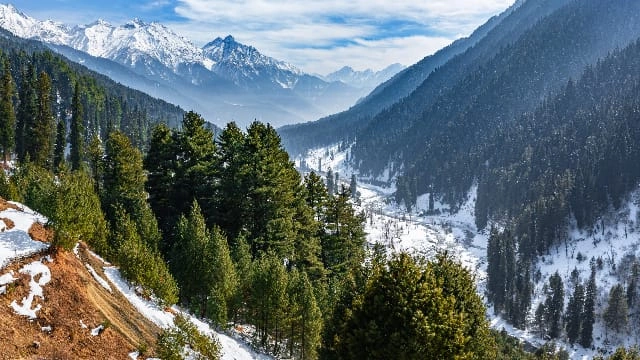
Srinagar in winter is a different city. Dal Lake occasionally freezes, Gulmarg operates as one of India’s best ski destinations, and the old city takes on a character that the tourist-facing summer version does not show. Average temperatures range from -2°C to 8°C, and snowfall is common from December onwards.
This season suits travellers who specifically want snow landscapes and Gulmarg skiing, and who are comfortable with the fact that some roads and sites may be inaccessible during heavy snowfall periods. Accommodation rates drop significantly in winter, and the Mughal Gardens are dormant — but the Kashmir that remains is genuine.
Top Things to Do in Srinagar
Dal Lake and the Shikara Experience

Dal Lake is 18 square kilometres of water, houseboats, floating gardens, and the daily commerce of a community that has lived on it for generations. A Shikara ride at sunrise — before the tourist boats begin their circuits — is a different experience from the midday version. Budget approximately ₹500 to ₹800 per hour for a standard Shikara (2026 rates; verify at the ghat).
The floating vegetable market operates from around 6:00 AM and is worth the early departure. For a quieter alternative to Dal’s busier corridors, Nigeen Lake — connected to Dal by channels — has fewer houseboats and significantly less boat traffic. Several of Srinagar’s better heritage houseboats are positioned on Nigeen, and the atmosphere is closer to what Dal Lake was before mass tourism.
The Mughal Gardens: Nishat and Shalimar
Nishat Bagh and Shalimar Bagh sit on the eastern shore of Dal Lake, both laid out in the 17th century during the Mughal period. Nishat Bagh (the Garden of Bliss) is the larger of the two — twelve terraces descending toward the lake, framed by chinar trees that make it exceptional in autumn. Shalimar Bagh was built by Emperor Jahangir and carries a more formal geometry.
Both gardens are best visited in the morning before tour groups arrive. Entry is straightforward and inexpensive; plan 45 minutes to an hour at each.
Shankaracharya Temple
The Shankaracharya Temple sits on a hill 1,100 feet above the valley floor, dedicated to Lord Shiva and offering the best elevated view of Srinagar, Dal Lake, and the surrounding mountains. The climb involves approximately 243 steps from the road terminus. Camera restrictions apply at certain points. Plan 60 to 90 minutes including the ascent and descent.
Early morning (6:00 to 7:30 AM) offers the best light and the coolest temperature for the climb.
Old City Heritage Walk
The old city of Srinagar — centred around the Jama Masjid in Nowhatta and the lanes of Maharaj Gunj — is a different urban register from the Dal Lake tourist zone. The 17th-century Jama Masjid, built in wood and brick in the Indo-Saracenic tradition, is architecturally significant and genuinely impressive in scale. The lanes around it are the working commercial city — spice merchants, shawl traders, bakers selling Kashmiri bread (girda and lavasa) from wood-fired ovens.
A 2 to 3 hour walk through this area, ideally with a local guide, gives the trip a depth that Dal Lake alone does not provide.
Wazwan: The Culinary Argument for Staying Longer
Wazwan is the traditional Kashmiri multi-course feast — Rogan Josh, Yakhni, Tabak Maaz (fried ribs), Gushtaba (minced meat balls in yoghurt gravy), and Shami Kebab, served on a shared platter called a trami. A proper Wazwan is a 36-dish meal at its most formal, though most restaurant versions offer a curated selection.
For an authentic experience, look for family-run restaurants in the old city rather than hotel restaurants oriented toward tourist expectations. The food in Srinagar is one of the strongest arguments for extending the trip by a day.
Srinagar Tour Planner: 3-Day and 5-Day Itineraries
Before planning your days, here is a quick reference for the most common on-ground costs:
| Activity / Item | Estimated Cost (2026) |
|---|---|
| Shikara Ride | ₹600 – ₹800 per hour (official govt. fixed rates) |
| Mughal Garden Entry | ₹24 – ₹40 per person |
| Wazwan Feast | ₹600 – ₹1,200 per person (restaurant average) |
| Gondola Phase 1 (Gulmarg) | ₹740 per person (verify at counter) |
| Shankaracharya Temple Entry | Free (parking charges apply) |
3-Day Srinagar Itinerary
Day 1 — Dal Lake and the Old City
- 6:00 AM: Shikara ride on Dal Lake (floating market if arriving on time)
- 9:00 AM: Breakfast on the houseboat or at a lakeside café
- 11:00 AM: Shankaracharya Temple (morning light, cooler climb)
- 2:00 PM: Old City heritage walk — Jama Masjid, Maharaj Gunj lanes
- Evening: Nishat Bagh (sunset view from the upper terraces)
Day 2 — Gulmarg Day Trip
- 7:00 AM: Depart Srinagar for Gulmarg (52 km, approximately 1.5 hours)
- 9:00 AM: Gondola Phase 1 to Kongdori (2,650 m) — views of Nanga Parbat on clear days
- Optional: Gondola Phase 2 to Apharwat Peak (3,980 m) — confirm operational status in advance
- Afternoon: Return to Srinagar via Tangmarg; stop at a dhaba on the highway
Day 3 — Mughal Gardens and Nigeen Lake
- Morning: Shalimar Bagh and Nishat Bagh (visit both in one morning)
- Afternoon: Transfer to Nigeen Lake; afternoon Shikara or houseboat time
- Evening: Wazwan dinner in the old city
5-Day Srinagar-Gulmarg-Pahalgam Circuit
Day 1 — Dal Lake, Shankaracharya, Old City (as above)
Day 2 — Gulmarg full day (as above); overnight in Gulmarg
Day 3 — Gulmarg to Pahalgam via Srinagar (approximately 3.5 hours total). Afternoon: Betaab Valley and Aru Valley exploration near Pahalgam. Overnight in Pahalgam.
Day 4 — Pahalgam: Baisaran meadows (pony or walk), Lidder River walks, local market. Optional: Chandanwari (30 km from Pahalgam, snow point accessible year-round).
Day 5 — Return to Srinagar (approximately 2 hours). Mughal Gardens morning. Afternoon: Shopping at Lal Chowk and the emporia on Residency Road for Pashmina, Kashmiri carpets, and saffron. Evening flight from Sheikh ul-Alam International Airport, Srinagar (SXR).
Essential Logistics: What Most Travel Guides Skip
SIM Cards in Jammu & Kashmir — Read This First
This is the most commonly misunderstood logistics point for first-time Kashmir visitors. Only postpaid SIM cards work in Jammu & Kashmir. Prepaid SIMs from any Indian operator — including Airtel, Jio, and Vi — do not function in J&K. This includes roaming.
If you are travelling on a prepaid connection, you will have no mobile data or calls from the moment you land at Srinagar airport until you leave. Your options are:
- Convert your existing number to postpaid before travel (this takes 24 to 48 hours to activate)
- Purchase a local J&K postpaid SIM at the airport on arrival (Airtel and BSNL counters are present)
- Download offline maps (Google Maps or Maps.me) for Srinagar, Gulmarg, and Pahalgam before departure
Plan for this. It catches a significant proportion of first-time visitors off guard.
Flights from Delhi to Srinagar
Indira Gandhi International (IGI) Airport in Delhi is the primary departure hub for Srinagar. Direct flights operate on this route daily, with IndiGo, Air India, SpiceJet, and GoFirst (subject to operational status) covering the Delhi-Srinagar sector. Flight time is approximately 1 hour 20 minutes.
For travellers from Delhi, early morning departures (6:00 to 7:30 AM) are the most reliable — afternoon flights from Delhi are more susceptible to delays that compound across the day. Book 3 to 4 weeks in advance during peak season (April, July-August) and 6 to 8 weeks ahead for the tulip season window.
Ground Transport Within Srinagar and Beyond
Srinagar’s urban transport options are limited compared to Delhi or Mumbai. For the Srinagar-Gulmarg-Pahalgam circuit, a private hired vehicle is the practical choice — it provides scheduling flexibility that shared cabs and public buses do not.
For car hire in Srinagar coordinated from Delhi before departure, Suwish Global Travels arranges verified local operators with fixed rates communicated before travel. This removes the uncertainty of negotiating at the Srinagar taxi stand on arrival, particularly for multi-day circuits.
| Route | Distance | Approx. Drive Time |
|---|---|---|
| Srinagar → Gulmarg | 51 km | 90 minutes |
| Srinagar → Pahalgam | 95 km | 2.5 hours |
| Srinagar → Sonamarg | 87 km | 2.5 hours |
The Laxmi Nagar Advantage for Delhi Travellers
For travellers based in Delhi NCR, planning a Kashmir trip through Suwish Global Travels carries a specific logistical benefit. Our office in Laxmi Nagar is 35 to 40 minutes from IGI Terminal 2 via NH-48. This physical proximity allows us to handle J&K-specific travel paperwork and group coordination in-person for Delhi NCR residents — without the delays that come from coordinating documentation remotely through a call centre or online-only operator.
For groups with complex requirements — multiple pickup points across Delhi NCR, combined domestic and international legs, or corporate travel with GST billing requirements — this local presence translates into faster resolution when things need to be adjusted.
Accommodation in Srinagar: What to Know
Srinagar’s accommodation divides into three distinct categories, each with a different experience profile.
Heritage Houseboats on Dal and Nigeen Lakes are the defining Srinagar stay — cedar-panelled interiors, hand-embroidered furnishings, and the experience of waking up on the water. Quality varies significantly between operators; the difference between a well-maintained heritage houseboat and a neglected one is material. Rates range from ₹3,000 to ₹15,000+ per night depending on category and season.
Hotels in the Residency Road and Boulevard Area offer the most reliable standard for travellers who want predictable quality close to Dal Lake and the main tourist zone. Mid-range options cluster between ₹4,000 and ₹9,000 per night in peak season.
Old City Guesthouses suit travellers who want proximity to Jama Masjid, the authentic street food scene, and the working city rather than the tourist zone. Rates are lower; standards vary.
For hotel booking in Srinagar with access to pre-verified properties across all three categories, our team coordinates availability and rates directly — particularly useful during peak season when quality houseboats and better hotels book out weeks in advance.
Why Book Your Srinagar Trip Through Suwish Global Travels
There are dozens of operators offering Kashmir packages online. The difference with a managed booking through Suwish Global comes down to three specific things that matter when you are actually on the ground:
GST-compliant billing — every booking issued through our corporate and individual travel accounts carries a proper GST invoice, structured for ITC claims where applicable. For business travellers, this is directly relevant. For individuals, it means a transparent, accountable transaction rather than an informal arrangement.
Dedicated account management — you have a named contact from booking confirmation through to return. When the Srinagar-Gulmarg road is closed due to snowfall and your Day 2 itinerary needs to be restructured, you call one person who knows your booking and can act immediately.
On-ground local coordination — our Srinagar network includes verified transport operators, houseboat owners, and local guides whose standards we have assessed over multiple seasons. We do not recommend a property or operator based on commission arrangements.
Contact Suwish Global Travels to plan your Srinagar trip — share your travel dates, group size, and budget, and we will structure an itinerary and quote within one business day.
Frequently Asked Questions
What is the best month to visit Srinagar in 2026?
Ans April for the Tulip Garden bloom and spring colour — book 6 to 8 weeks ahead. September and October for autumn foliage and saffron harvest with fewer crowds. June to August for the classic houseboat experience. December to February for snow and Gulmarg skiing.
Do Indian prepaid SIM cards work in Srinagar?
Ans No. Only postpaid SIM cards function in Jammu & Kashmir. Prepaid connections from any Indian operator — Jio, Airtel, Vi — do not work, including roaming. Convert to postpaid before travel or purchase a local J&K postpaid SIM at Srinagar airport on arrival. Download offline maps before departure as a backup.
How do I get from Delhi to Srinagar?
Ans Direct flights from IGI Airport, Delhi to Sheikh ul-Alam International Airport, Srinagar take approximately 1 hour 20 minutes. IndiGo, Air India, and SpiceJet operate this route daily. Book 3 to 4 weeks ahead during peak months. There is no direct train to Srinagar from Delhi — the Udhampur-Srinagar-Baramulla Rail Link is under construction.
Is a 3-day trip to Srinagar enough?
Ans Three days covers Dal Lake, Shankaracharya, the Mughal Gardens, the Old City, and a Gulmarg day trip adequately. To include Pahalgam and the full Srinagar-Gulmarg-Pahalgam circuit, five days is the minimum comfortable duration.
What is the Shikara ride rate on Dal Lake?
Ans Government-fixed rates apply at the official Shikara ghat: approximately ₹500 for a 30-minute ride and ₹800 to ₹1,200 for a one-hour ride (2026 rates — verify at the official rate board at the ghat). Private operators may quote higher; insist on the government rate board price.
Does Suwish Global Travels provide GST invoices for Kashmir tour bookings?
Ans Yes. All bookings — flights, accommodation, transport, and packages — are invoiced with full GST documentation under your GSTIN where applicable. Corporate accounts receive consolidated monthly invoices. Individual travellers receive itemised GST receipts for all paid services.
What is the Wazwan and where should I eat it in Srinagar?
Ans Wazwan is the traditional Kashmiri feast — a multi-course meal of slow-cooked mutton preparations including Rogan Josh, Yakhni, Gushtaba, and Tabak Maaz, served on a shared trami platter. For an authentic experience, eat at family-run restaurants in the old city near Jama Masjid rather than hotel restaurants. Avoid places that describe themselves as “Wazwan restaurants” near the Boulevard Road tourist strip — these are oriented toward tourist expectations rather than genuine preparation.
Is Kashmir safe for solo female travellers?
Ans Yes, Srinagar and the main tourist zones are considered safe for solo female travellers. The hospitality culture in Kashmir is well-established and the tourism infrastructure is mature. Standard urban precautions apply. Travelling with a verified local guide for old city walks and for Pahalgam and Gulmarg excursions is recommended for solo travellers of any gender — both for safety and for the quality of the experience.